Who Should Replace Kennedy on the U.S. Supreme Court

Recently, Justice Anthony Kennedy, the longest serving justice on the Supreme Court, having been appointed by President Reagan in 1988 officially announced his retirement. Justice Kennedy was considered the Supreme Court swing vote on many of the Court’s Amy Barrettblockbuster cases from abortion to gay rights to affirmative action and the Second Amendment. The announcement of his retirement has energized constitutionalists as the president now has an opportunity to appoint a consistent constitutionalist voice to serve on the high court.

The president has announced he will pick from a list of 25 to replace Kennedy and the announcement will take place on July 9. With that being said, here are my thoughts on worthy finalists for the seat. I have named my 3 top candidates and a dark horse candidate that will likely not be named this time around, but if another opening emerges would be a strong choice in the future.

Top Choice- Judge Amy Barrett of the Seventh Circuit

Judge Barrett recently assumed her position on the Seventh Circuit after serving as a very well respected academic and scholar at Notre Dame Law School for several years. She is a graduate of Notre Dame Law School and clerked for Judge Laurence Silberman of the D.C. Circuit and the late great Justice Antonin Scalia at the U.S. Supreme Court. She has seven children and is a very devout Catholic.

Judge Barrett presents many advantages, she is a renowned legal scholar with first-hand experience working with the top legal minds in the nation. She also has braved through difficult confirmation hearings for her Seventh Circuit appointment and will not shy away from another challenging process. Some may remember these hearings for the attacks she endured for being a devout Catholic in the legal community.

In terms of the law, her legal philosophy is rooted in constitutionalism and originalism as evidenced in her writings. She has written:

 “The Constitution’s original public meaning is important not because adhering to it  limits judicial discretion, but because it is the law. . .the measure of a court, then is fidelity to the original public meaning, which serves as a constraint upon judicial decisionmaking. A faithful judge resists the temptation to conflate the meaning of the    Constitution with the judge’s own political preference; judges who give into the temptation exceed the limits of their power by holding a statue unconstitutional when it   is not.”[1]

Furthermore, she is not overly bound by the philosophy of stare decisis which promotes a strong adherence to prior court decisions even if they have questionable grounds. One who has an overreliance on stare decisis follows prior decisions closely and plays extra attention to how long they have been law and is often reluctant to issue a sweeping decision to disturb precedent. Judge Barrett has recognized in her writings that judges should not be over relying on stare decisis, it is merely a factor. If decisions were wrong the day they were decided they are still wrong today. The Court should not be relying on stare decisis as a prevailing factor, the Court first and foremost should be adhering to the Constitution.

Some may point to her judicial inexperience as a negative, however, that same sentiment was once echoed for another judge, Clarence Thomas, who has become of the top judges of the modern era.

Overall, I believe Amy Barrett should be the top choice for the Supreme Court vacancy. Her intellect and proven accomplishments as a respected legal mind will be a great asset to the court for years to come.

Senator Mike Lee                      

U.S. Senator Mike Lee is another notable name that has drawn intrigue to fill the vacant Supreme Court seat. Mike Lee represents the Utah in the senate and has a proven conservative record. He graduated from Brigham Young Law School and clerked for current U.S. Supreme Court Justice Samuel Alito when Justice Alito served on the Third Circuit. Before becoming a senator he specialized in appellate and Supreme Court litigation. As a senator, he serves on the judiciary committee.

Judge Thomas Hardiman of the Third Circuit

The runner up to Justice Gorsuch for Justice Scalia’s seat, Judge Hardiman currently sits on the Third Circuit. Judge Hardiman is a graduate of Notre Dame and Georgetown Law School. His judicial record indicates strong support for the Second Amendment and he Judge Thomas Hardiman of the 3rd Circuit and Fed Socalso joined an opinion vacating the conviction of an anti-abortion protestor who was peacefully protesting. He also possesses a strong judicial record recognizing religious freedom interests. Having joined the Third Circuit at age 41, he has many years of federal judicial experience and would be a strong fit for the court.
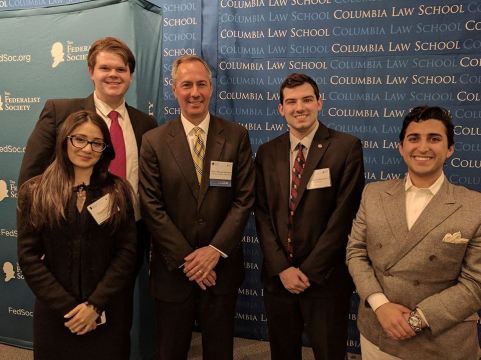
I also should note, having personally met him he was a very genuine and soft-spoken individual. He exerts a humbleness about him that should garner a great deal of respect from his peers.

Dark Horse: Judge Patrick Wyrick of Oklahoma Supreme Court and U.S. District Court Nominee

Judge Wyrick is only 37 years old and his name has been rising in conservative legal circles for his work as an Oklahoma Supreme Court Judge and former solicitor general of Oklahoma. While his nomination is unlikely with his relative youth at this point, expect his name to gain steam if another vacancy opens. He has been nominated to serve on the U.S. District Court for the Western District of Oklahoma and is awaiting a vote before the senate. It is clear that his career is being fast-tracked to one day reach the circuit level or perhaps the Supreme Court.

Some of Judge Wyrick’s significant experiences include representing Oklahoma in challenging the Affordable Care Act and representing the interests of the state in a notable death penalty case.

[1] Barrett, Amy Coney, “Countering the Majoritarian Difficulty” (2017). Constitutional Commentary. 4

Masterpiece Bakeshop and its Incomplete Defense of Religion

As this U.S. Supreme Court term winds down, we reflect on one of its signature decisions, the Masterpiece Bakeshop case. The facts of this case and those similar to it have been debated since the legalization of same-sex marriage in Obergefell v. Hodges. The threshold question has been, how will same-sex marriage impact the rights of religious objectors? Suits have been brought and filed against religious small business owners such as bakeshops, florists and photographers. While the outcome of Masterpiece Bakeshop was a victory for religion and proof that it justifiably maintains Constitutional protections, the decision and reasoning used in the majority opinion approached the matter from a narrow perspective. In my personal opinion, Justice Thomas’ concurring opinion (joined by Justice Gorsuch) presented a stronger method of legal reasoning, freedom of expression.

With regards to the majority opinion, Justice Anthony Kennedy focused on the issue of the Colorado Civil Rights Commission adjudicating the complaint against Masterpiece Bakeshop with an animus towards religion. The public record reflected unjust bias against matters of faith and most specifically the bakeshop owner, Jack Phillips, with unfair commentary by the commissioners which in turn called into question the fairness of the proceeding. The majority opinion relied on discussing the State’s duty under the First Amendment to not base laws or regulations on hostility towards religion or a religious viewpoint. This opinion provided acceptable Constitutional reasoning, but it would have been stronger if it had focused on reinforcing the importance of Jack Phillips’ constitutional right to freedom of expression.

Justice Thomas argued in his concurrence that “states cannot punish protected speech because some group finds it offensive, hurtful, stigmatic, unreasonable, or undignified.”  He cited Texas v. Johnson that provided, “if there is a bedrock principle underlying the First Amendment it is that the government may not prohibit the expression of an idea simply because society finds the idea offensive or disagreeable.” He warns that this sets a dangerous precedent for state actors and government to stomp out any forms of expression that it deems not in line with the mainstream. This is a very dangerous path that the United States must not undertake and is a major issue that the Constitution was meant to defend against.

Finally, the last paragraph of Justice Thomas’s opinion provides an excellent summary that recognized the warranted fears for religion that emerged after Obergefell. Justice Thomas stated:

“In Obergefell, I warned that the Court’s decision would inevitably come into conflict with religious liberty, as individuals are confronted with demands to participate in and endorse civil marriages between same sex couples. This case proves that the conflict has already emerged. Because the Court’s decision vindicates Phillips’ right to free exercise, it seems that religious liberty has lived to fight another day. But, in future cases, the freedom for speech could be essential to preventing Obergefell from being used to ‘stamp out every vestige of dissent’ and ‘vilify Americans who are unwilling to assent to the new  orthodoxy.’ 576 U.S. at ____ (Alito, J., dissenting) (slip op., at 6). If that freedom is to    maintain its vitality, reasoning like the Colorado Court of Appeals’ must be rejected.”

This was a powerful statement by Justice Thomas and emphasized that his warning regarding the harmful threats to religion indeed have come to pass. Freedom of expression doctrine can largely mitigate the harmful threats towards religion.

It is commonly presented in opposition commentary that there should be bounds to freedom of expression, most notably in regards to religious objectors and that freedom of expression should not be used to expel or discriminate against people. Well one could argue that in these facts there is no such weaponization. Jack Phillips offered to make regular cakes and other products for the same sex couple. They were never denied service to his establishment, he just simply chose to not provide same sex wedding cakes as a featured product at the bakery. It did not matter if the couple sought to purchase the product or one of their mothers. There was no animus towards an individual entering the establishment based on their orientation. It was a conscious religious choice by Phillips to not produce the product. This is an essential fact with regards to the analysis and one that should be the subject of further commentary when adjudicating these cases.

Overall, Obergefell has had far reaching effects most notably in the context of religious freedom, Despite what mainstream commentary would lead one to believe, there still is strong sentiment in favor of respecting religious values in this nation. Religious liberty was a major factor in establishing this nation as evident in the early Protestant settlers that had fled England in response to religious persecution. The right to religious liberty and expression are core constitutional principles. While Masterpiece was a start in the right direction, there is still much work to be done and I argue it should have went further.

Maybe just maybe one day Justice Thomas’ brilliant concurrence will be central reasoning in a religious liberty majority opinion, time will tell……….


Why U.S. Supreme Court Justice Clarence Thomas Inspires Me

This weekend, Justice Clarence Thomas celebrated his 70th birthday. As a nation, we should come to appreciate the great work he has done during his tenure on the U.S. Supreme Court. His consistent adherence to Constitutionalist values and principle makes him one of the greatest judges of the modern age.

When I was in high school and became actively interested in law, I always had a respect for Justice Thomas, mainly because he would serve as the late great Justice Scalia’s wing man of sorts in many notable Supreme Court decisions. I respected him, but did not truly appreciate his contributions and his role on the court until reading his memoir “My Grandfather’s Son”, which is one of the greatest books I have every read, and in law school when I dissected several of his opinions. In an interesting irony, although I was a great admirer of Justice Scalia and agreed with much of his legal reasoning and opinions, I often found myself being more persuaded by Justice Thomas’s analysis in his opinions. Both have gained my respect, but the consistent historical approach and strict originalism of Justice Thomas was an ever so slight deciding factor for me.

One of Justice Thomas’ greatest opinions in my view is his dissent in the notable marriage case, Obergefell v. Hodges. Putting aside the debate of the outcome of the case, I would like to draw attention to one of his lines in the opinion that speaks volumes about the role of judges and the direction of Constitutional law. He states, “by straying from the text of the Constitution, substantive due process exalts judges at the expense of the People from whom they derive their authority.”  This is a similar argument used by another judge I admire, the late Robert Bork. As stated in prior posts, the flawed doctrine of substantive due process essentially provides a blank check to the judiciary to craft their own meaning to what should constitute due process. In many cases involving this doctrine, the decision of the judges takes away the voice of the people on various issues that were meant to be decided by states, such as marriage in this situation. However, we should also focus on the second half of the clause that emphasizes judges derive their authority from the people and in turn the Constitution that the people ratified. When flawed doctrines such as substantive due process replace the voice of democracy, this endangers Constitutional law. Justice Thomas has been consistent in championing this concept during his tenure on the court.

I am inspired by Justice Thomas’s brilliant legal mind through his opinions, but also in coming to understand the person of Justice Thomas by reading his book. This is a man that has dealt with adversity his entire life, but each time responded and triumphed despite the odds, lies and animosity demonstrated against him.

Growing up he was raised by his grandparents because of a difficult family situation. His grandparents installed strong values in him that he would later use to persevere through the darker stages of his later life. After leaving the seminary and entering college he was confronted with racism by other students and embraced activism. He still fought through it and became a top student, eventually making it to Yale Law school where he excelled.

During later stages of his life, however, he battled alcoholism and unhealthy relationships. Eventually after a lost phase, he began to drift back towards the moral center in which he was raised. He eventually became a federal judge and later a Supreme Court justice with gathering support of friends along the way.

However, his Supreme Court hearings were a true test, one that was among the most difficult with the slanderous testimony of Anita Hill in an attempt to sink his nomination, despite the work he did in mentoring her as a young attorney. The media ran with her fictious accounts, but fortunately failed to sink the nomination and he has become one of the greatest judges in the modern day. His experience however, was described as a “high-tech lynching.” However, the true assessment of champions is how they respond to the adversity confronting them. He persevered through his experience and was determined to not allow the distortion machine to run its course and cost him a seat on the Supreme Court.

Ultimately, these difficult experiences forged Justice Thomas into the powerful individual and ardent Constitutionalist he remains to this day. Instead of breaking down and recoiling in fear of the adverse treatment, he persevered and did not allow the outside noise to dictate who he was as a person.

This is an inspiring example and one that people should emulate whether they are a Constitutionalist, Living Constitutionalist or Conservative, Liberal. Happy 70th Justice Thomas and may you continue to inspire.

Buckley’s Prediction Comes True- Looking back at “God and Man at Yale” and the Academic Freedom Debate Raging on in the Modern Day

The recent attacks on renowned Constitutional law scholar Josh Blackman and other scholars speaking on campuses has taken the front pages in the academic freedom debate. When Josh Blackman spoke at St. John’s in Spring 2017 the student body and professors on both sides of the aisle were very receptive to the issues him and Professor Anita Krishnakumar brought up in their debate. I was very surprised at the backlash and disrespect of the students at CUNY during his presentation there this past spring. This encouraged me to research the origins of the academic freedom debate. Josh Blackman and Fed Soc

William F. Buckley Jr, the great conservative intellectual, published “God and Man at Yale” in 1951 and it discussed the origins of the academic freedom debate that is encountered today in campuses across America. It is uncommon on campuses to have equal time devoted to both sides of the ideological spectrum. In many cases, the voice of conservative thought or commentary is not spoken of or if it is, it is belittled and chastised. This creates an uncomfortable learning environment and fails to provide students with a fulfilling learning experience. I encourage reading this book to learn about the foundations of the problem.

With one side seemingly dominant in many cases, the students are trained to not have an openness of the other perspective. When opportunities are presented to challenge that way of thinking, a certain hostility develops in response, as seen in many examples such as Josh Blackman and Ben Shapiro’s talks on campuses. There are sensationalist outcries without even considering what is presented. This reflects a sad state of America and for the future of higher education if nothing is done to bring reforms.

Buckley takes us to the beginning of the educational breakdown. It began in the philosophy, psychology and sociology departments at institutions of higher education.

This book provides a narrative at Buckley’s personal experience at Yale, first as a student and later as an interested alum concerned about the direction of the school. A common theme across the novel is the attack against religion and freedom of belief across the campuses. It led to a breakdown of values and essentially an indoctrinated mass of young people graduating the schools who would late become leaders in society.

He discusses in his work how many students would enter college with an understanding and appreciation of God in their life, largely from the example of their parents. Upon entering college, however, the students would eventually fall prey to philosophy and social science departments that either did not include religion in any context or at the very least failed to provide equal attention to an understanding of religion and God in several courses where it would have been appropriate. Buckley also cited examples at Yale where some professors would take a hostile approach to religions and mock its influence in society. By silencing voices critical to their perspective, the professors largely hollowed the cause of academic freedom.

Although published in 1951, the trend still continues across campuses today. The student is left in a difficult position, to either stay silent and be intimidated or speak out and risk compromising the final course grade.

Marxism is the main culprit and has spread into many avenues on campuses, from economics departments to english departments and philosophy departments.  While students studying or having an understanding of Marxism is not inherently problematic, the problem arises when there is a failure to adequately balance it with equal time to alternate theories such a free-market capitalism or other theories in philosophy that generate different conclusions than Marxism. The student should attend university and be exposed to a balance of theories, not just be viewed as the latest prototype in a larger project to groom the next generation of social activists. This is a disservice to the student in university seeking to attain a full education experience. When intolerance is bred in the classroom with something as basic as theories, it translates into intolerance as professionals.

One of the greatest examples of collaboration between both sides of the aisle on this front is between renowned liberal scholar Cornel West and renowned conservative scholar Robert George.  Both of these scholars could not be more different in terms of ideology, yet they both believe in freedom of expression and academic freedom in our institutions of higher learning. If more of this sentiment was reflected on campuses across this nation, we would have a society with a heightened intellect capable of understanding both sides of issues. There would be less intolerance and more professionalism prevalent in society.


Scalia vs. Stevens: An Intellectual Battle for the Ages on the Second Amendment

Lately, there has been an abundance of commentary on the Second Amendment and its role in society due to school shootings and the “March for Our Lives.” Sadly, much of the commentary has been rooted in emotion and there has been too great a willingness to dismiss  a clear right defined under the Constitution, “the right to bear arms.”

This post is dedicated to informing and offering a brief, but respectful opinion on the matter. Society would go a long way in having an educated perspective by reading the brilliance of the late great Supreme Court Justice Antonin Scalia and his ideological inverse, but equally gifted intellectual rival, retired Supreme Court Justice John Paul Stevens.

The case at point, District of Columbia v. Heller, illustrated a logical and historical debate on the Second Amendment that is too often lost in the agenda driven media of today. The Supreme Court held that banning handguns and prohibiting firearms from being operative in the home for self-defense purposes violated the Second Amendment.

We will break this down by reviewing excerpts of Justice Scalia’s majority opinion and distinguishing from excerpts in Justice Stevens’ dissenting opinion.

The Second Amendment’s text provides, “A well regulated Militia, being necessary to the security of a free State, the right of the people to keep and bear Arms, shall not be infringed.”

Justice Scalia provides a methodical approach to his majority opinion and goes through each of the major clauses in the amendment to support his argument preserving the originalist definition of the Second Amendment.

He dissected the clause, “Keep and bear Arms” and cited the following historical premises and strong support for the individual to extend ownership over guns even without a military purpose:

“From our review of founding-era sources, we conclude that this natural meaning was also the meaning that “bear arms” had in the 18th century. In numerous instances, “bear arms” was unambiguously used to refer to the carrying of weapons outside of an organized militia. The most prominent examples are those most relevant to the Second Amendment: Nine state constitutional provisions written in the 18th century or the first two decades of the 19th, which enshrined a right of citizens to “bear arms in defense of themselves and the state” or “bear arms in defense of himself and the state.”

Scalia’s argument stemmed from the fact that this clause historically has not had a limited understanding defined to just carrying weapons in militia, rather it has also been interpreted to mean carrying weapons for the purposes of individual self-defense. Justice Scalia then disputed the claim of Justice Stevens that the Second Amendment must be strictly regulated to a military purpose.

Justice Scalia highlighted the meaning of the operative clause of the Second Amendment. He discussed how the right to bear arms was a pre-existing right that was simply codified within the text of the Second Amendment.  He traced this historical background to England and the time of the Stuarts when the people of that nation were in fear of governmental abuses and also sought self-defense within the confines of their own home. He stated “but the threat that the new Federal Government would destroy the citizens’ militia by taking away their arms was the reason that right—unlike some other English rights—was codified in a written Constitution.”   This understanding carried through to when the colonists settled in American and began developing state governments and eventually the nation itself.

Justice Scalia, however, was quick to point out that the individual right is not unlimited:

“It is not a right to keep and carry any weapon whatsoever in any manner whatsoever and for whatever purpose: For example, concealed weapons prohibitions have been upheld under the   Amendment or state analogues. The Court’s opinion should not be taken to cast doubt on longstanding prohibitions on the possession of firearms by felons and the mentally ill, or laws forbidding the carrying of firearms in sensitive places such as schools and government buildings, or laws imposing conditions and qualifications on the commercial sale of arms.”

Justice Scalia is emphasizing that the right to bear arms must be respected, however, it can come with limitations including specified prohibitions that have been already reflected in laws throughout the nation. Prohibitions with regards to the mentally ill and schools can be viewed in the context of the present debate the nation finds itself in.

While Justice Scalia mentions that the carrying of firearms in schools can be forbidden depending on the locality, he does not cast doubt in the existence of the right to bear arms. Some have made calls to repeal the Second Amendment entirely  but this would be a grave mistake. We must be able to distinguish the role of an enumerated right in our Constitution that has stood the test of time and reasonable laws regulating that right.

Overall, the majority opinion in the case found that,

“The Second Amendment protects an individual right to possess a firearm unconnected with service in a  militia, and to use that arm for traditionally lawful purposes, such as self-defense within the home.  The Amendment’s prefatory clause announces a purpose, but does not limit or expand the scope of the second part, the operative clause. The operative clause’s text and history demonstrate that it connotes an individual right to keep and bear arms.”

In concluding, while the right to bear arms should not be taken as a blank check without some form of oversight for the sake of safe public policy, it is a violation of the Constitution to deny that the right exists. It also shows a limited understanding of law and policy in general when there is commentary stating that all the problems will be solved with banning the Second Amendment or so strongly restricting it in the public so as to effectively eliminate the right.

Stevens Dissent

Justice John Paul Stevens disagreed with this assessment but provided an interesting method in deconstructing it. He is willing to use originalism to an extent, focusing on the text and historical background to support his basis. This is the common means of interpretation in which Justice Scalia prepared his arguments when interpreting the Constitution and this case was a major example of it. Justice Stevens could be defined as a progressive jurist that typically relied on the living constitutionalist perspective to interpret the Constitution. This perspective is not bound in history and historical meaning, rather it takes an evolving view of the Constitution. The fact that Justice Stevens dared to enter the realm of Justice Scalia in this major case, amplified the debate. While I disagree with Justice Stevens’ outcome I respect the logical method he relied upon to reach his conclusion.

Justice Steven’s main argument is that the Second Amendment has a central focus of an armed citizenry for military purposes. He believes this is clearly defined in the amendment.

When each word in the text is given full effect, the Amendment is most naturally read to secure to the people a right to use and possess arms in conjunction with service in a well-regulated militia

He supports this premises by citing examples of legislative history and proposals sent by the framers from the various states for the purpose of crafting the Second Amendment. Some of these proposals emphasized the importance of being military bound with the right to bear arms. Other proposals wholly defined the right as personal without being bound for a military purpose, however, these were rejected. As a result, he argues that the final wording provides a military purpose with the focus on militia, thus this should be the central means of interpretation.

The history of the adoption of the Amendment thus describes an overriding concern about the potential threat to state sovereignty that a federal standing army would pose, and a desire to protect the States’ militias as the means by which to guard against that danger. But state militias could not effectively check the prospect of a federal standing army so long as Congress retained the power to disarm them, and so a guarantee against such disarmament was needed

I do not find, however that legislative history serves as ample support for his premise. Legislative history should not be revered to the same degree as actual law. Often, the debates, discussions held and early proposals leading up to the adoption of a law were just that, debates discussions, and proposals. Some ideas may have made it to the final outcome which is the law, while others did not. We cannot hold such a fickle understanding of an area of law to such high esteem.

Even if we do concede the point emphasized by Stevens in regards to the federal standing threat to state sovereignty that does have merits to the Second Amendment discussion, it still does not change the fact that the right to bear arms exists. The thought process in developing the law may have wanted to address the fear of Congress disarmament of its citizens, but for the citizens to actually have an opportunity to resist they required their own right to arms. This is why any discussions about eliminating the Second Amendment should be a non-starter. The right exists and is clear in the text. If people want change they need to address laws with the understanding that the right exists and cannot be denied. They can, however, enact reasonable gun policy while operating within the context of acceptance of this right and not in opposition to it. This is a distinction that must be made and has too often been drowned out in recent discourse.

Hobby Lobby and the Notre Dame Disappointment

In 2014, the Supreme Court handed down a major opinion in response to the Affordable Care Act in a case called Burwell v. Hobby Lobby Stores[1]. This concerned the contraceptive mandate provided in the act that required companies to provide coverage for contraceptives for employees. At issue in this case, was the religious freedom interest of a largely closely-held corporation, Hobby Lobby, that is owned and managed by the Greens, a devout Christian family that refused to provide abortifacient contraceptives to their employees. As a result of not providing the additional abortifacient coverage, the company would have been subject to excessive monetary penalties. Justice Samuel Alito wrote a brilliant majority opinion finding in favor of the closely-held corporation in finding that the mandate was not the least restrictive way to ensure access to contraceptives for employees.

The center of Justice Alito’s argument focuses on the Religious Freedom and Restoration Act (RFRA) test that states:

“A government action that imposes a substantial burden on religious exercise must serve a compelling government interest, and we assume that the HHS regulations satisfy this requirement. But in order for the HHS mandate to be sustained, it must also constitute the least restrictive means of serving that interest.”

The contraceptive mandate did not satisfy the least restrictive means prong of the test because the government did not use the accommodation method provided to religious nonprofit organizations that exempted the organizations from facilitating abortifacient contraceptive coverage to employees.

He explained:

“In fact, HHS has already devised and implemented a system that seeks to respect the religious liberty of religious nonprofit corporations while ensuring that the employees of these entities have precisely the same access to all FDA-approved contraceptives as employees of companies whose owners have no religious objections to providing such coverage. The employees of these religious nonprofit corporations still have access to insurance coverage without cost sharing for all FDA-approved contraceptives; and according to HHS, this system imposes no net economic burden on the insurance companies that are required to provide or secure the coverage.”

A key element to the exemption provided to religious nonprofits was the concept of cost-sharing.  Churches would receive a full exemption from having to offer that coverage and religious nonprofits would need to complete Form 700 or provide written notice to the government of their intention to not provide.  The government would not impose a cost-sharing burden on that employer, but would find an alternate way to provide the contraceptive coverage to an employee through third-parties or the government itself upon the notice from the employer. This was the system that the government had refused to carve out for-profit closely held corporations that was under hands-on ownership from the religious objector, the Green family.

Justice Alito concluded:

“Although HHS has made this system available to religious nonprofits that have religious objections to the contraceptive mandate, HHS has provided no reason why the same system cannot be made available when the owners of for-profit corporations have similar religious objections. We therefore conclude that this system constitutes an alternative that achieves all of the Government’s aims while providing greater respect for religious liberty. And under RFRA, that conclusion means that enforcement of the HHS contraceptive mandate against the objecting parties in these cases is unlawful.”

Overall, the Hobby Lobby decision was a step in the right direction for the Supreme Court in protecting religious liberty interests.  Justice Alito’s majority opinion was rooted in the tradition of this nation that considered the views of people of faith worthy of some form of enhanced protection. It should be noted, however, that although Justice Alito pointed out the alternate options the government had provided, he stopped short of a full endorsement of those options. He was just recognizing the fact that those options existed and provided a less restrictive means for entities identifying with a faith mission to comply with the government regulations on contraceptive coverage.

As an aside, before reaching the topic of Notre Dame’s shocking betrayal to the religious liberty lobby with its “compromise”, we first look at an excerpt from Hobby Lobby when it was still at the Circuit Court level before reaching the Supreme Court. Then judge on the 10th Circuit Court of Appeals and current U.S. Supreme Court Justice Neil Gorsuch provided strong insight into the scope of religious freedom in his concurring opinion.

He stated:

“As they understand it, ordering their companies to provide insurance coverage for drugs or devices whose use is inconsistent with their faith itself violates their faith, representing a degree of complicity their religion disallows. In light of the crippling penalties the mandate imposes for failing to comply with its dictates — running as high as $475 million per year — the Greens contend they confront no less than a choice between exercising their faith or saving their business.”

“No doubt, the Greens’ religious convictions are contestable. Some may even find the Greens’ beliefs offensive. But no one disputes that they are sincerely held religious beliefs. The [RFRA] Act doesn’t just apply to protect popular religious beliefs: it does perhaps its most important work in protecting unpopular religious beliefs, vindicating this nation’s long-held aspiration to serve as a refuge of religious tolerance.”

Judge Gorsuch touches on some very interesting points in his concurrence at the 10th Circuit that found in favor of Hobby Lobby. Judge Gorsuch recognized the devout and sincere faith of the Greens and how they should not be punished for holding the closely-held corporation that they own and operate to remain consistent with this belief system. The structure of this closely-held corporation allows for a more hands on approach to operation of the business as opposed to a larger corporation that has in place many layers and a mass amount of shareholders who hold a diverse set of beliefs. Hobby Lobby is a more centralized entity as a closely-held corporation, thus there is a stronger link between the ownership and operation of its mission.

 Notre Dame Breakdown:

The Opening Salvos of Litigation

Notre Dame, as a religious nonprofit university, had challenged the contraceptive mandate for its employees.  It sought a preliminary injunction prohibiting the government from compelling the Notre Dame health insurer and health plan administrator from providing contraceptive coverage to university’s students and employees.  The employees of Notre Dame are self-insured for medical expenses, but Meritain Inc. acts as a Third-Party Administrator (TPA) for the university health plan that is provided by Meritain’s parent company, Aetna.[2]  For students, Notre Dame provides them with an option of obtaining health insurance from Aetna at rates negotiated by Notre Dame.[3]

Notre Dame self-certified as a religious nonprofit by completing Form 700 to avoid paying penalties for not providing coverage, but the employees and students still had a means through the companies to obtain contraceptives even if Notre Dame was not directly financially supporting it.  Notre Dame argued that this burden was still too great because the completion of the form opened the process for the alternate means for the companies to provide coverage.   The court disagreed and explained that, “Although Notre Dame is the final arbiter of its religious beliefs, it is for the courts to determine whether the law actually forces Notre Dame to act in a way that would violate those beliefs.”[4]  The court found the exemption mechanism was suitable to properly disconnect the university from providing coverage.  The administration of the coverage though the companies without Notre Dame cost-sharing was an acceptable method to avoid the burden.

Economic interests of Meritain and Aetna were also weighed by the court.  It challenged Notre Dame for its attempt to exclude Aetna and Meritain from “possibly a lucrative chunk of their business” by attempting to gain an injunction against dispensing the coverage.[5]  The court was also not satisfied with the exemption alternatives that Notre Dame offered which centered on the employees and students directly appealing to the government for coverage of contraceptive services without Notre Dame’s involvement.  It found the administrative burden on the employees, students, and government too great.[6]  Injunctive relief was denied.

                     A Retreat?

Elizabeth Kirk of National Review explained  Notre Dame’s shocking decision to backtrack from its original stance and instead pursue a compromise in which Notre Dame would not contest the insurance company providing simple contraceptives to its employees and students upon request. This unfortunate development calls into questions its identity as a Catholic institution of higher learning.

This situation worsens when one considers the fact that the Trump administration recently enacted a  policy  revoking Obama era doctrine that mandated the contraceptive coverage if a religious institution did not qualify for a full exemption. As of December 31, 2017, all birth control coverage in university plans would no longer be mandated and the institutions would not be forced to require coverage if it did not meet government standards. Even with the new provision that has taken into account the religious interests of people of faith, Notre Dame still chose to move forward with a compromise within its institution that would allow coverage for practices outside Catholic teaching.

Yes, it is acknowledged that Notre Dame will fund Natural Family Planning which is in accordance with church teaching in this compromise, but the decision to succumb to the pressure of societal forces for the sake of “pluralism” to allow for simple contraceptives to remain in plans is troubling. Institutions of higher learning should not be afraid of their faith tradition and the beliefs that set them apart from other entities. Providing contraceptives in insurance plans is a valid expectation in a state school that is not affiliated with a faith tradition, not in a Catholic school that claims communion with the church and markets itself as such.

Conclusion

Overall, the Hobby Lobby litigation and Notre Dame compromise are interesting developments in the legal debate about the contraceptive mandate. The Supreme Court took a step in the right direction by carving out an exception for closely-held corporations that operate their company with a faith mission. The excessive penalties for not providing the coverage were an undue burden on faith. The least restrictive means that is cited by the court, however, still carries questions in its own right. One could argue that the indirect provision that would still allow for contraceptives to be covered through the actions of a religious nonprofit entity is still troublesome. The administration has rendered the matter largely moot when it comes to universities with its new declaration, but, the actions of Notre Dame to still allow coverage provide valid reason to be concerned. It threatens the identity of a Catholic institution of higher learning.

[1] 134 S.Ct. 2751

[2] Univ. of Notre Dame v Burwell, 786 F3d 606, 608 (7th Cir 2015).

[3] Id.

[4] Id. at 612.

[5] Id. at 613.

[6] Id. at 617.

Judge Don Willet on the Liberty Interest and Role of the Judiciary

Last post, we provided commentary on Supreme Court Justice Clarence Thomas’ perspective on substantive due process and how he strongly opposes the doctrine. This week we contrast that perspective with Judge Don Willet of the Fifth Circuit, a major conservative jurist, who offers support in recognizing substantive due process in the context of economic liberties. Judge Willet prioritizes the liberty interest embedded in the due process clause as worthy of meaningful judicial intervention when necessary.

When Judge Willet served on the Texas Supreme Court his concurrence in the case, Patel v. Texas Department of Licensing and Reg., recognized that the courts have a duty to protect economic liberties, especially in the context of occupational organizations. The facts presented here  revolve around an eye-brow threading business that challenged Texas law for its oppressive regulations in obtaining cosmetology licenses. To obtain a license, it required 720 hours of training and a large portion  of the training hours did not directly relate to the occupation. The court also considered the out-of-pocket expenses of obtaining the hours and the delaying of employment while meeting the hours requirement as constituting an oppressive burden on the small business.[1]

Judge Willet’s opinion is brilliantly written and emphasizes the importance of the licensing requirements for the small business being related to the service provided. The approach of the Texas law infringes on the liberty interest of those seeking to obtain a license with its excessive requirements that did not correlate appropriately with the services provided.[2]

He also spends a large portion of his concurrence providing contrasting perspectives in the conservative legal movement’s approach to economic rights. In one camp, he highlights Judge Robert Bork and traditional conservatives that have looked at the judiciary from a more non-interventionist perspective to give way to majoritarian decision-making. In the other camp, he finds himself, where the judiciary must intervene when necessary and not leave it always to strict majoritarian decision-making. Liberty is the priority and judges have a duty to enforce this as a chief staple of limited government. He finds that “economic freedom is indispensable to enjoying other freedoms.”[3]

While I find myself more in the traditional camp when considering Alexander Hamilton’s clear mandate in Federalist 78 for the judiciary to be bound with judgment authority not with legislative authority, I have a great deal of respect for Judge Willet’s perspective especially within the contexts of these facts. However, we need to be very cautious when calling for judicial enforcement of economic liberties under the due process clause. In the matter presented here, it is a logical solution to oppressive regulations, but often courts can find ways to misconstrue and abuse sound judgment found in other cases when considering their own. This can lead to a problematic doctrine that emerges in which a cycle of damaging precedent is established.

Consider these facts, in an alternate universe suppose Roe v. Wade was one day overturned and states again had the power to make decisions on the legalization of abortions through democratic measures. Now consider Planned Parenthood, a company that provides several health services for women including abortions. Assume a state banned abortion through democratic measures, but a Planned Parenthood remained in the state. How would Planned Parenthood’s claim be adjudicated if it believes the state law has been oppressive to its economic liberty interest and abortions were a key component to its business? On one hand we have that abortion is no longer a Constitutional right, but on the other we may have the court finding an extension of economic liberty under the Constitution with regards to a business practice in opposition to state law. Perhaps the easy solution would be for that Planned Parenthood to no longer offer abortions, but maintain other services, but it is doubtful that it would be content with that arrangement.

This is the slippery slope that can be encountered if we are not careful with how we handle economic liberties. The sound liberty reasoning of Judge Willet in Patel with regards to a burdensome occupational licensing requirement can easily be weaponized into a battle over the creation of new Constitutional rights.

A viable counter-argument from Judge Willet explains that economic regulation is not as often generated by legislatures, but rather by administrative entities that are not subject to proper oversight. When considered it in this context, a judicial deference to legislatures would not be a viable solution to correct unjust policy.[4]  In these situations, the judiciary must provide a forcible intervention in an effort to preserve an individual’s liberty interest to economic freedom.

However, I would then offer the premise that referendums and amendments to state constitutions should be promoted by the state authorities and political figures to address an excessive administrative state. Democracy, when allowed to blossom to its fullest extent, can make meaningful reforms. I do understand the hesitancy of Judge Willet, however, in embracing a full majoritarian platform. The people can be misled and interests of the minority perspective can be shunned by unregulated rule of the masses. That is why these are very difficult questions and it is the responsibility of the branches of government to provide legitimate checks on one another.

Overall, I believe both the perspectives of Justice Thomas and Judge Don Willet provide compelling arguments for how to evaluate substantive due process. I find myself more in the Thomas camp with strict resistance to substantive due process and the uncertainties it poses, however I can also see the wisdom of Judge Willet’s argument that emphasizes liberty and the duty of judges to restrict an unregulated majoritarian state that would challenge it.

[1] 469 S.W.3d 69 (2015)

[2]Judge Don Willet Concurrence,  http://www.txcourts.gov/media/1008502/120657c1.pdf   page 29

[3]Judge Don Willet Concurrence,  http://www.txcourts.gov/media/1008502/120657c1.pdf   page 37

[4]Judge Don Willet Concurrence,  http://www.txcourts.gov/media/1008502/120657c1.pdf  page 17


Modern Substantive Due Process Perspectives Part 1:  Justice Clarence Thomas     

While researching for a prior blog post a couple weeks back, I had a chance to review the Supreme Court’s decision in Obergefell v. Hodges.  Last year, renowned legal scholar Professor Scott Gerber who has spent significant time providing commentary on Supreme Court Justice Clarence Thomas’ jurisprudence spoke at our St. John’s Federalist Society Chapter to reflect on Justice Thomas’ legacy. He suggested at the event that I read Justice Thomas’ dissent in that case to gain insight into his substantive due process jurisprudence and I am glad I had the opportunity to do so.

This week we will cover some modern commentary on substantive due process  and analyze Justice Thomas’ dissent in this case that was rooted in a critique of substantive due process. We will then briefly explain the similarities it has with the late great Judge Robert Bork’s view on this doctrine.

As discussed above, Justice Thomas provided sharp critical commentary of substantive due process in his dissent. He stated:

“It distorts the constitutional text, which guarantees only whatever ‘process’ is ‘due’ before a person is deprived of life, liberty, and property. Worse, it invites judges to do exactly what the majority has done here—’roa[m] at large in the constitutional field’ guided only by their personal views’ as to the ‘fundamental rights’ protected by that document. Planned Parenthood of Southeastern Pa. v. Casey, 505 U. S. 833, 953, 965 (1992). By straying from the text of the Constitution, substantive due process exalts judges at the expense of the People from whom they derive their authority.”[1]

When evaluating due process cases, Justice Thomas first looks to if there is a deprivation of life, liberty, or property. This is the most important part of the analysis because there must be something that the government is taking or denying without first undertaking fair procedures to validate its decision. This is the part of the analysis where Justice Thomas acknowledges that the door opens for activist adjudication. He warns that a great distortion of the due process clause is relied upon here to support the invention of fundamental rights. He is critical of the legal reasoning which claims that not recognizing this previously unenumerated “right” would violate the due process clause. However, due process should not apply if the right does not exist as a matter of Constitutional law.  It is a doctrine with weak foundations. Due process protections should not be invoked to protect “rights” that do not hold a firm Constitutional basis.

The substantive due process example from this dissent concerns the issue of marriage as a Constitutional right and is one of the best modern examples, however there are many more that have plagued the Supreme Court for generations dating back to the infamous Dred Scott case when persons were classified as property, thus invoking due process. Just as persons should not have been considered property under the clause, neither should marriage be considered under the liberty provision.

For example, states have traditionally been the issuers of marriage licenses and state legislatures had individually defined what constituted the definition of marriage under their state policies. Some chose a limited view to heterosexual unions and others a more expansive definition, thus opening the definition to same-sex unions and requiring the issuance of the licenses to those couples. In both cases, heterosexual and same-sex marriage were not issues of Constitutional law as the Constitution remained silent on expanding the liberty provision to include this marriage right.

As Justice Thomas so eloquently explains later in his dissent:

“Even if the doctrine of substantive due process were somehow defensible—it is not—petitioners still would not have a claim. To invoke the protection of the Due Process Clause at all—whether under a theory of ‘substantive’ or ‘procedural’ due process—a party must first identify a deprivation of  ‘life, liberty, or property.’ The majority claims these state laws deprive petitioners of ‘liberty’, but the concept of ‘liberty’ it conjures up bears no resemblance to any plausible meaning of that word as it is used in the Due Process Clauses.[2]

He then invokes William Blackstone as a strong basis for historical support for this position:

“As used in the Due Process Clauses, “liberty” most likely refers to “the power of loco-motion, of changing situation, or removing one’s person to whatsoever place one’s own inclination may direct; without imprisonment or restraint, unless by due course of law.” 1 W. Blackstone, Commentaries on the Laws of England 130 (1769) (Blackstone). That definition is drawn from the historical roots of the Clauses and is consistent with our Constitution’s text and structure.”[3]

 Judge Robert Bork provides a similar perspective to Justice Thomas in his book, The Tempting of America.  He reasoned that the due process clause was “simply a requirement that the substance of law be applied to a person through fair procedures by any tribunal hearing a case. The clause says nothing whatever about what the substance of the law must be.”[4]  This position reflects Justice Thomas in the sense of warning about constructing substantive rights without a supportive Constitutional basis and taking given provisions out of context to satisfy an unconstitutional end.

In our substantive due process reflections, whether we agree or disagree with the perspective put forth by Justice Thomas and Judge Bork we should consider the nature of due process. Understanding the background of this important clause and its historical context as it has evolved through the generations in law will make us better informed on the law and Constitutionalist principles.

[1] 135 S. Ct. 2584 (2015).

[2] Id.

[3] Id.

[4] Robert Bork, The tempting of America: The Political Seduction of the Law 32 (1991).


Scalia Speaks Part 1 Review: Vocation of a Judge

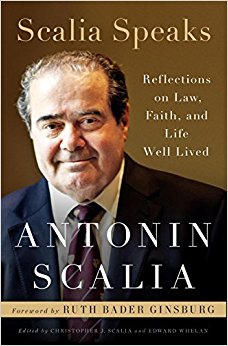
I have been reading Christopher Scalia and Edward Whelan’s wonderful compilation of the late great Supreme Court Justice Antonin Scalia’s notable speeches in their book, “Scalia Speaks: Reflections on Law, Faith, and Life Well Lived.”[1]  I highly recommend this book to everyone, not just those with a legal background.  All Americans would do well to absorb the words of this modern icon.

This series, beginning with this post will highlight some of the most inspirational speeches found in the book.  Most of us are aware of the distinct character of Justice Scalia’s legal opinions and colorful dissents, but these talks cited here bring us to understand the very heart of Justice Scalia. Many of these speeches have been very Scalia Speaksmoving to me.  Today’s post will focus on the speech “The Vocation of a Judge” that the late justice gave in Peru in 2007.  It is a timeless lesson and should help shape our perspective on how to view judges as guardians of the law.
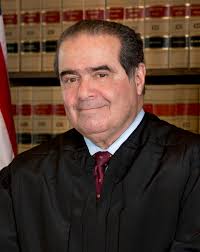
Justice Scalia breaks down his speech into emphasizing three important qualities that reflect a good judge. First, he explains judges recognizing their role as servants of the law.  Second, judges should use a neutral, objective decision-making process that is dictated by the traditions of the legal system when deciding cases.  He calls this principle scholarship.  Third, he encourages judges to exercise appropriate demeanor to the parties that come before him, rooted in fairness and inspiring confidence from the public of the process undertaken to reach the result.

First, as servants of the law Justice Scalia emphasizes that personal biases of the judge should not come in the way of a proper evaluation of the legal texts and facts presented to decide the matter at hand.  In this speech he focuses on the personal biases of some judges for or against capital punishment and how their perspective should not end legislative debate through an errant ruling.

Scalia’s concept can also be viewed in the marriage and abortion contexts in the modern day. The Supreme Court’s decision on the definition of marriage in Obergefell v. Hodges silenced the voice of democracy and valid legislative debate on the issue. Some states were in favor of expanding the definition, while others were not and each state had valid reason to turn to their people and legislatures to decide the issue.  In abortion, when Justice Scaliaconsidering the Roe v. Wade decision in 1973, the question of its legal prowess could have been maintained in the state context through state law and amendments to state constitutions through referendums if necessary.  One may contemplate the degree of personal biases in both these decisions and question if the reasoning reflected that of good judging.

 Second, Justice Scalia considers an objective and neutral decision-making processes as necessary to be undertaken by judges in order to reach conclusions on the legal matters presented to them. A judge should be consistent with his interpretive style and not veer off course too often in order to reach a desired outcome.  There must be a distinction between natural inclinations and the duty presented to judges to fairly interpret the law based off objective authority and rooted within the confines of the Constitution.

An example that comes to mind would be a jurist that is devout in his faith tradition during his personal life.  It is acceptable to have formed a personal perspective on a major issue.  However, when the judge is presented with facts in a case the outcome reached should not come as a result of his theological belief on a major topic, but rather his interpretation on what the Constitution has presented or not presented on the issue.  It would be the expectation that perhaps the Federalist Papers would be cited rather than the Catechism of the Catholic Church when composing a majority opinion.

Third, Justice Scalia considers the presentation of a judge to the parties in court.  The parties should not feel a sense of discomfort or fear that they will not be given a fair evaluation of their legal arguments.  This is why it is very important when judges give interviews or public statements on personal perspectives they should strive to not espouse a sense of unfair bias when considering issues that might be considered in the cases presented to them.

The people of the nation must trust the process and have confidence in the judiciary.  The judiciary is the check on legislative and executive overreach.  However, Justice Scalia does explain that this does not mean that a judge should be making a decision for the sake of popularity or being heralded as a social icon because of the outcome reached.  No, he finds that the judge who may go against the societal tide should accept and embrace rejection from louder figures because he took an oath to defend the Constitution, not answer to the people like politicians. This is a very important message and all too often when reviewing Supreme Court history, we read decisions that seem to hint at reputation building rather than Constitution preserving.

Lastly, Justice Scalia provides an interesting assessment on the roots of judicial activism. He finds that emphasis in the first year of law schools on teaching common law, which is judge made law, begins to form a pattern in the mind of the young student that a judge who creates the best rule is the ideal judge. He used the example of the notable Palsgraf v. Long Island Railroad Company case where there are great distinctions in the majority opinion of Judge Cardozo vs. the dissenting opinion of Judge Andrews when evaluating the case.  Both of the methods used are debated to this day on which was the best rule to apply to the negligence issue presented in that case.

Justice Scalia, argues in contrast, that the laws in which he is mainly tasked with assessing include acts by Congress and interpretation of the Constitution itself.  Our legal system is not based in common law, rather it simply serves as a guide.  This principle applies to many levels of the judiciary such as state courts where commonly statutes are interpreted.  Statutes are laws passed by a legislative entity.  The United States Constitution and the various state constitutions were not created by judges.  Justice Scalia calls on judges to stay within their confined authority when embarking on their judicial career.  The concept of a judge should not be introduced to the next generation of legal minds as a lawmaker, this develops an unhealthy pattern of legal interpretation.

Overall, this speech was inspiring and Justice Scalia provided several interesting lessons on how to evaluate good judging and its vocation.

[1] Christopher J. Scalia and Edward Whelan, Scalia Speaks: Reflections on Law, Faith, and Life Well Lived (2017).

Reflecting on the Humble and Independent Jurisprudence of Byron White

Byron White was appointed to the Supreme Court by President John F. Kennedy in 1962. During his tenure on the Court he distinguished himself as a maverick on several occasions and was not susceptible to the evolving views of society when he approached cases presented to him. He was one of the best modern-day examples of judicial independence and has received praise from both sides of the ideological aisle. With that being said, it is hard to classify him as either a judicial conservative in the mold of Justice Scalia or a judicial liberal in the mold of Justice Ginsburg. Nor should he be thought of as an ardent Constitutionalist. Rather, he was a justice that understood and embraced a humbleness in his duties as a jurist and recognized the Supreme Court as not a place for judicial legislating, but rather a place for judicial evaluating. It also should be noted that Justice Gorsuch clerked for him.

This post will reflect on a couple of Justice White’s major opinions where he exercised judicial deference in contemplating his role as a justice adjudicating these major matters that held heavy societal implications. Justice White fully embraced his role as a jurist and the duties that came with that responsibility. Alexander Hamilton’s words in Federalist 78 in describing the Supreme Court, “It may truly be said to have neither FORCE nor WILL, but merely judgment” come to mind when reflecting on Byron White.

Justice White was hesitant to endorse the creation of new Constitutional rights and his dissent in Roe v. Wade[1] reflects this perspective.  This sense of judicial humbleness should be embraced by judges today on the bench and be a persuasive characteristic when appointing and voting for the confirmation of judges.

A notable excerpt gives us insight into Justice White’s approach and why this should be a viable standard of measurement for judicial appointments in the modern day:

“The Court simply fashions and announces a new constitutional right for pregnant mothers and, with scarcely any reason or authority for its action, invests that right with sufficient substance to override most existing state abortion statutes….  As an exercise of raw judicial power, the Court perhaps has authority to do what it does today; but, in my view, its judgment is an improvident and extravagant exercise of the power of judicial review that the Constitution extends to this Court.”[2]

He dissects Roe and is very critical of the process outlined in the majority opinion in which the Supreme Court invalidated valid democratic decision-making by state legislatures regarding abortions. It expanded the 14th Amendment liberty interest that had already been found to encompass the right to privacy in Griswold v. Connecticut[3] to include the right to abortion. Although concurring in Griswold, he found Roe went too far with creating the right to abortion and overruling the decisions of many states on the issue.

Inventing a Constitutional right that will have a major impact on society is not something that should be taken lightly and Justice White firmly believed it was not the place of the Court to end the debate with its ruling. He recognized the power given to the Court in judicial review, but warned that this opinion was an abuse of that power.

Retired Supreme Court Justice John Paul Stevens, who served along side Justice White for many years on the Supreme Court, acknowledged Justice White’s later reluctance to have the judiciary exert excessive influence when it comes to evaluating the liberty interest under the 14th Amendment. He stated in his work, Cheers! A Tribute to Justice White, that

“Justice White’s opinions, like those of Justices Harlan, Frankfurter, and Cardozo, demonstrate a conviction that the judicial power to define the concept of liberty is not open-ended.”[4]

This conceptual understanding further manifests itself in Justice White’s majority opinion in the case, Bowers v. Hardwick[5]  that concerned state statutes criminalizing sodomy. He demonstrated judicial restraint by not elevating sodomy to a fundamental right, but rather allowing democracy to run its course with the states maintaining the decision-making authority on the matter and maintaining their freedom to assess the merits of the statutes:

“Nor are we inclined to take a more expansive view of our authority to discover new fundamental rights imbedded in the Due Process Clause. The Court is most vulnerable and comes nearest to illegitimacy when it deals with judge-made constitutional law having little or no cognizable roots in the language or design of the Constitution. That this is so was painfully demonstrated by the face-off between the Executive and the Court in the 1930’s, which resulted in the repudiation of much of the substantive gloss that the Court had placed on the Due Process Clauses of the Fifth and Fourteenth Amendments. There should be, therefore, great resistance to expand the substantive reach of those Clauses, particularly if it requires redefining the category of rights deemed to be fundamental. Otherwise, the Judiciary necessarily takes to itself further authority to govern the country without express constitutional authority. The claimed right pressed on us today falls far short of overcoming this resistance.[6]

He positioned himself as a firm critic of judicial intervention when there is no textual anchor to create a fundamental right, most specifically in regards to interpreting the due process clauses in the Constitution. His words hint at the danger of the nation falling under rule by the judiciary when these clauses are distorted to find a fundamental right when the text has not clearly stipulated it. He goes so far as to coining the Court “nearest to illegitimacy” when it takes this path. These are strong words, but this understanding should be embraced in the modern day as judges come to better grasp their role in interpreting, rather than making law.

Overall, Justice White’s approach to the bench can be considered one of humbleness in embracing his role as a Supreme Court jurist and not being afraid to defer to democracy when the case presented calls for it. The independence streak he displayed is a model for judges tasked with the responsibility to interpret law. It is doubtful he was concerned about how the history books would view his jurisprudential legacy, but rather more likely his chief concern was upholding the Constitution and recognizing the limitations that come with this task.

We will close with these thoughts offered by J. Thomas Sullivan on Justice White in his work, Justice White’s Principled Passion for Consistency:

“[H]e demonstrated a strain of judicial independence and dedication to principle that encourages us, as lawyers, to believe that all presidential appointments to the High Court have the potential for faithful service to a vision of the Constitution that is not imbedded in extreme political ideology or blindness to the virtues of reasoned argument.”[7]

Let us take these words to heart and honor Justice White’s legacy by entering a post-politically charged phase when it comes to the appointment of judges. When these judges assume their position on the bench, let them then follow in his footsteps and recognize their role and the limitations it brings.


[1] 410 U.S. 113 (1973).

[2] 410 U.S. 179 (1973), 221-23. (Doe v. Bolton- companion case to Roe- dissent taken together)

[3] 381 U.S. 479 (1965).

[4] John Paul Stevens, Cheers! A Tribute to Justice Byron R. White, 1994 BYU L. Rev. 208, 214 (1994).

https://digitalcommons.law.byu.edu/cgi/viewcontent.cgi?article=1796&context=lawreview

[5] 478 U.S. 186 (1986).

[6] Id. at 194-95 (Later this case would be overturned by Lawrence v. Texas , 539 U.S. 558 (2003) which overturned a Texas Criminalized Sodomy Statute).


[7] J. Thomas Sullivan, Justice White’s Principled Passion for Consistency, 4 J. App. Prac. & Process 79, 80 (2002) https://lawrepository.ualr.edu/cgi/viewcontent.cgi?article=1035&context=appellatepracticeprocess