Christmas Creches and the Constitution

The holiday season is upon us and many Americans gather together in celebration of Christmas and Hanukkah. It is among the happiest times of year and its commonplace to travel around neighborhoods and find lights and decorations of the holiday spirit. Some families have an inflatable Santa Claus and reindeer on their lawns while others have nativity scenes or menorahs to celebrate the season. The excitement of this time of the year has been a staple of the American culture since its founding and even before when several pockets of faith-driven people emigrated to this land for religious freedom. Once the nation was founded the religious influence continued in the formation of the Constitution. The First Amendment contains protections for religious interests with the Free Exercise clause and protection from a state-run domineering religion like the Church of England in the Establishment Clause.

This post will assess the Supreme Court weighing in on holiday symbolism most specifically in the case, Lynch v. Donnelly[1].

In Lynch, suit was brought because of the display of a Christmas creche by the city in a park coupled with other Christmas decorations such a Santa Claus house and a Christmas tree.  For 40 years the creche scene was part of the display during the Christmas season.  The Supreme Court found in favor of the city on various grounds.

Here, we will focus on aspects of the majority opinion of Chief Justice Warren Burger and the concurrence offered by Justice Sandra Day O’Connor. Justice Burger’s opinion provides sound legal reasoning as to why the creche should not constitute a violation of the Establishment Clause. However, the concurrence offered by Justice O’Connor provides an interpretation that seems to constitute an expansive understanding of Establishment Clause violations.

Chief Justice Burger’s opinion recognizes prior legal commentary on the wall of separation of church and state as not persuasive when considering the facts provided here. He cites examples rooted in the history of our nation that show a government relationship with faith such as legislative prayer with ministers, Executive proclamations as to Christmas being a national holiday and the proclamation of a National Day of Prayer. These are all examples he offered about the nation displaying its religious heritage and how it cannot be broken.[2]

A complete separation is impractical; however, he does concede that if the display was made for a wholly religious purpose without a secular purpose considered it would run into Constitutional problems. The display of the creche being provided during the holiday season with the other decorations provides a heterogeneous nature to the purpose, but is not entirely excluding the religious influence.[3]

Justice O’Connor’s concurrence expands on the definition of the Establishment Clause as applied to the facts of this case.

She states:

“The Establishment Clause prohibits government from making adherence to a religion relevant in any way to a person’s standing in the political community. Government can run afoul of that prohibition in two principal ways. One is excessive entanglement with religious institutions, which may interfere with the independence of the institutions, give the institutions access to government or governmental powers not fully shared by nonadherents of the religion, and foster the creation of political constituencies defined along religious lines.  The second and more direct infringement is government endorsement or disapproval of religion. Endorsement sends a message to nonadherents that they are outsiders, not full members of the political community, and an accompanying message to adherents that they are insiders, favored members of the political community. Disapproval sends the opposite message.”[4]

Her first point of analysis is fair in that it would not be healthy for society to have excessive government entanglement with religious institutions like the Church of England did and reach a controlling point where the government is influencing the appointment of ordained religious or influencing services.

However, her second point is debatable. Government endorsement or disapproval of religion is a very subjective standard and even taken to its fullest interpretation in which the government offers religious symbolism, it is difficult to see an issue if multiple religions are so called “endorsed”. The government is composed of the American people, if citizens submit requests for the government to recognize a major faith celebration through the placement of holiday symbols on government property for the holidays, there should not be a concern unless a recognized religion was denied an opportunity that was provided for other faiths. Many faiths can be so called “endorsed” because it is simply reflecting the views that are a part of their local citizenry. The origins of this nation have historically carved out faith interests that should continue to be respected in the modern day.

Furthermore, this interpretation she offered can be unsettling. She makes a leap that assumes that a form of government support for religion leads to the creation of outsider label for those that do not believe in religion. This is not persuasive for a variety of reasons. In essence, she is saying that a Christian will be considered a favored member of the community over an atheist because they celebrate a holiday such as Christmas that is national recognized and would like to offer symbolism to celebrate the season in the local community.

Would Justice O’Connor then consider taking away Christmas as a national holiday because atheists do not believe in it? Is making Christmas a national holiday creating an outsider label to atheists? How far is she willing to expand this reasoning? It is undeniable that the origins of Christmas have a faith-based nature. Those that do not believe in Christmas or Hanukkah and do not find themselves practicing religion made that decision on their own for personal reasons. It was not the government reflecting the beliefs of other members of the community that pushed them to a so-called “outsider” label.

The government’s role is not to make decisions for an individual on what they choose or not choose to celebrate on an individual basis. Allowing symbols of those that celebrate religious holidays is not interfering with the personal decision-making capacity of an individual.

However, even if we concede and sympathize with Justice O’Connor’s reasoning, there fails to be adequate evidence of a diminished position in the political community because of one’s non-belief.  For example, the right to vote which is a political community benefit is not taken away from atheists because of their choice to not follow a faith tradition

Her strongest counter would likely be churches and property tax exemptions where religious organizations are offered certain tax benefits by declaring their religious status. However, the entity as a whole is being allotted that benefit not the parishioners on their own personal property tax bill. On a broader scale perhaps, this can be considered a “favoritism” of sorts towards faith institutions, but on an individual scale both the parishioner and non-believer are required to pay their fair share in taxes. The individual’s attendance or non-attendance in a faith community does not alter their level of political participation in the community.

Overall, Lynch provided some interesting commentary from the Supreme Court on how holiday religious symbolism should be viewed. It raised some points about the bounds of Separation and the proper role of the Establishment Clause. Chief Justice Burger offered foundational principles of the religious heritage of the nation and how to interpret its impact in the modern day while Justice O’Connor provided an expanded perspective that draws valid questions of debate.


[1] 465 U.S. 668 (1984).

[2] Id. at 674-77.

[3] Id. at 686.

[4] Id. at 688.
Justice Sotomayor and her troubling Trinity Lutheran Dissent

Supreme Court Justice Sonia Sotomayor is widely regarded in circles as the Supreme Court Justice that only rivals Ruth Bader Ginsburg in her consistent adherence to liberal  principles on the bench. Last post we discussed swing-vote Justice Anthony Kennedy and his history in regards to cases with religious freedom.  Here, we will dissect  some points in Sotomayor’s dissent in Trinity Lutheran, a recent religious freedom case, and the danger it poses to interpretation of religious freedom and the role of religion in jurisprudence.

The Supreme Court assessed in Trinity Lutheran if a private Missouri faith-based school was entitled to receive state funding through grants to provide safety playground tire on its playground.  The Court ultimately found in a 7-2 vote that the failure to provide state funding to the faith-based school like the non-religious private schools violated the Free Exercise Clause.

In Sotomayor’s dissent, she stated the Court’s “decision slights both our precedents and our history, and its reasoning weakens this country’s longstanding commitment to a separation of church and state beneficial to both.”

[1]Her history assessment can be the subject of much debate. As discussed in Professor Philip Hamburger’s book, “Separation of Church and State”[2] it is not a strong argument that the strict separation we consider in the modern day corresponds with our past. He points out in his book that the early Protestant communities in the United States found merit in the influence of religion in society as evident in their dedication to prayer in public forums such as appointment of chaplains[3], Protestant instruction and Bible reading as a core value in public schools[4] and local laws with respect to Sunday as the Lord’s day[5] among other influences. The main critiques of religion arose when the appropriate role of ministers in the community was considered with respect to political influence[6] and the emergence of Catholics who they found posed a threat to the society with proximity to the Pope[7].

Sotomayor ignores this in her dissent. By taking such a strong stance against religion and its influence in our society today, she is in essence denying a major component of the DNA of this nation and the principles it was founded upon.

In terms of precedent, she is correct in considering that the Supreme Court has been the chief enforcer of modern separation commentary. Major cases include Everson v. Board of Education[8] with the “Wall of Separation” constructed as a fundamental principle in interpreting the religious clauses and Engel v. Vitale[9] where prayer in public school was prohibited.

The merits of these cases, however, can be debated. If one wants to consider legal precedent these are persuasive cases, however, they reached a conclusion contrary to the founding principles of this nation. A case can be wrong the day it was decided and the Court should not be bound to follow it, but rather consider overturning if a case is heard with similar facts.

If Sotomayor took a closer look at the history of the nation, the view of religion in society predates these cases and should have been a persuasive consideration when adjudicating this case. However, assuming we concede the point and follow her reasoning that the precedent of separation should be maintained, she still does not persuade with her very drawn-out argument concerning the playground and “spiritual growth” of the students.

She states:

“The Church seeks state funds to improve the Learning Center’s facilities, which, by the Church’s own avowed description, are used to assist the spiritual growth of the children of its members and to spread the Church’s faith to the children of nonmembers. The Church’s playground surface—like a Sunday School room’s walls or the sanctuary’s pews—are integrated with and integral to its religious mission. The conclusion that the funding the Church seeks would impermissibly advance religion is inescapable.[10]

According to the mission statement, it is true that the Church considered the learning facility in the general sense to assist in spiritual growth of students, however the playground itself should not be categorized as a specific instrument for spiritual advancement. Sotomayor errs by equating the wall of a Sunday school and church pews to a premises of recreational activity. The playground surface could be constituted as part of a program that encourages spiritual growth, but it cannot hold this connotation on its own.

It further complicates her assessment if we consider facts in which the church rents out the playground for events to parishioners for non-religious activity or to unaffiliated individuals and groups. The premises would then be serving a wholly secular purpose.

Overall, Sonia Sotomayor’s dissent in Trinity Lutheran is very troubling to Constitutionalists that respect the text and original intent of the religious clauses embedded in the First Amendment. If the courts adopted her extended reasoning in this case and continue to hold the older religious cases in high esteem that began the separation commentary, religious freedom adjudication may further find itself in turmoil.

The outcome of this case was a positive development for this area of law, but no thanks to Justice Sotomayor.  Hopefully, if more of these cases come about, the Supreme Court can start to scale back the disastrous precedent that has been ever so persuasive on the jurisprudence of Justice Sotomayor and has denied the very fabric upon which our nation was built.


[1] 137 S. Ct. 2012, 2027 (2017).

[2] Philip Hamburger, Separation of Church and State (2002).

[3]  Id at 12-13.

[4] Id. at 220.

[5] Id. at 200

[6] Id. at 24, 112.

[7] Id. at 10.

[8] 330 U.S. 855.

[9] 370 U.S. 421.

[10] 137 S. Ct. 2012,  2029.


Predicting Kennedy in Masterpiece Cakeshop

This past week, the Supreme Court considered oral arguments in the Masterpiece Cakeshop[1] case. This case is one of the “blockbuster” cases this term for the Supreme Court. It will assess whether the owner of Masterpiece Cakeshop wrongly discriminated against a gay couple when he refused to make a same-sex wedding cake that would be in violation of his faith. This is a very heated case from both sides of the aisle, but this post will try to accomplish a nearly impossible task- try to predict how swing-vote Justice Anthony Kennedy will vote on this monumental case. There are various factors here including his history on the court concerning religious freedom cases.

I will focus this post on 2 major cases concerning religious freedom that Kennedy has been a part of during his tenure, Christian Legal Society[2] and Hobby Lobby[3]. After assessing them I will reach a conclusion and explain what the future may hold for cases in this category as a result.

Christian Legal Society

In Christian Legal Society, the Court assessed whether a campus student organization was in violation of an “All Comers” policy instituted by the school to welcome any student into their respective student group. The organization in question had a policy that did not allow membership to those that were involved in relationships that were in violation of Christian teaching. If the organization did not comply, it would not receive funding.

The Supreme Court held in a 5-4 vote that the school should not be compelled to alter its policy to allow for exclusion based on conduct. Kennedy wrote a concurrence in which he discussed the importance of the minority sentiment, in addition to discriminatory conduct:

“The school’s objectives thus might not be well served if, as a condition to membership or participation in a group, students were required to avow particular personal beliefs or to disclose private, off-campus behavior. Students whose views are in the minority at the school would likely fare worse in that regime.”[4]

Here, Justice Kennedy seems to be hinting at the importance of not allowing minority communities to be limited with expressing personal beliefs. While the facts here are different it would not be entirely unreasonable to suggest that Kennedy may use this when considering the cakeshop conflict between the couple and the owner. However, then it becomes a question of whether the enumerated rights of the individual owner to freedom of religion and expression of his beliefs must yield to a customer that is demanding a certain product?

Kennedy’s past seems to suggest a trend towards the couple here, but this can be challenged. Does the couple have the right to demand a product be made for them if it is not a service offered by the owner? There is a distinction between not making products and not serving people that can be unpacked. As long as the pre-existing services are still offered is there really a discriminatory motivation? These are some questions to contemplate.

Hobby Lobby

Next, we turn to the Hobby Lobby case where Justice Kennedy voted with the majority to uphold the right of the closely-held corporation to not be compelled to provide coverage for abortifacients and other contraceptives in violation of their religious beliefs.

He provides a perspective in this opinion that would seemingly take stronger consideration of religious beliefs. He stated in concurrence:

“Among the reasons the United States is so open, so tolerant, and so free is that no person may be restricted or demeaned by government in exercising his or her religion. Yet neither may that same exercise unduly restrict other persons, such as employees, in protecting their own interests, interests the law deems compelling. In these cases the means to reconcile those two priorities are at hand in the existing accommodation the Government has designed, identified, and used for circumstances closely parallel to those presented here. RFRA requires the Government to use this less restrictive means. As the Court explains, this existing model, designed precisely for this problem, might well suffice to distinguish the instant cases from many others in which it is more difficult and expensive to accommodate a governmental program to countless religious claims based on an alleged statutory right of free exercise.”[5]

In the early stages, Kennedy suggests religion as a right that has powerful force behind it. Then, he drifts into a discussion about the compelling interests test. In the facts of Hobby Lobby, the government had other alternatives to providing the coverage than forcing the closely-held corporation to provide it. Thus, Kennedy considered this persuasive in ruling for the closely-held corporation.

As applied to the facts of the cakeshop conflict, one must consider the role of government. Does the government have the right to compel a private business to make a certain product? Does it constitute discrimination to not make a product, thus requiring some government intervention?

Concluding Thoughts and a Bit of Obergefell

I do not think these facts line-up with discrimination, but it would not be unreasonable to foresee Kennedy going in the direction of Christian Legal Society because of the nature of the issue of sexual orientation. Kennedy has consistently found himself on the side of support for greater rights for same-sex relationships from Lawrence[6] to Windsor[7] to eventually Obergefell[8].

However, in Obergefell he did offer a bit of a nod to religious interests:

“it must be emphasized that religions, and those who adhere to religious doctrines, may continue to advocate with utmost, sincere conviction that, by divine precepts, same-sex marriage should not be condoned.”[9]

There is a question to how far Justice Kennedy would allow this religious interest to extend. Masterpiece will provide the ultimate test to Justice Kennedy and how far he is willing to balance the religious interests to government interests in regards to sexual orientation.

When considering Justice Kennedy’s history on the court regarding matters of religious freedom and sexual orientation, I tend to believe he will vote against the baker in this case. I will disagree with this outcome, but I think it is realistic to consider this possibility. I know some commentators have taken the opposite opinion , but I think they are in error to assume the baker will win.

The best chance for the future of this area in law to take better consideration of religious interests is a narrow holding and persuasive dicta by either Justice Gorsuch, Justice Alito, Justice Thomas or Chief Justice Roberts to allow for the issue to be re-litigated in the future with a different set of facts and new court composition. Overall, this case can be a losing battle in the overall effort, but this conflict is likely to not be resolved in one case and the future may hold a better outcome.

[1] Oral Arguments heard at Supreme Court- December 5, 2017.

[2] 561 U.S. 661 (2011).

[3] 134 S. Ct. 275 (2014).

[4] Christian Legal Soc’y Chapter of the Univ. of Cal. v. Martinez, 561 U.S. 661, 705

[5] Hobby Lobby, supra note 3 at 2786.

[6] 539 U.S. 558 (2003). Supreme Court overturned Texas statute that banned sodomy.

[7] 133 S. Ct. 2675. (2013) Supreme Court found a right to same-sex relationship inheritance rights.

[8] 135 S. Ct. 2584 (2015). Supreme Court legalized same-sex marriage.

[9] Id. at 2607.

Chief Justice Roberts’ Hamiltonian and Borkean Key to Unlock Modern Constitutionalism

Today, amid the many circuit appointments the President has made and Justice Gorsuch taking his position on the Supreme Court, there is an opportunity for Constitutionalism to rise again. There will likely be another Supreme Court vacancy within the next couple years and Chief Justice John Roberts will be tasked with leading the new court forward. My hope is Alexander Hamilton’s Federalist 78 will experience a revival of sorts when considering the next round of monumental cases.

In the modern age, one of the greatest proponents of the judicial restraint articulated in Federalist 78 was Robert Bork. His connection to Constitutionalism was discussed in a prior post. However, there have been traces of his interpretation style in some of the opinions composed by the Chief Justice.

An example I will point to today is his dissenting opinion in Obergefell, the case on the Constitutionality of the right to same-sex marriage. While this post will not provide commentary debating the outcome of the case, it will look to the legal reasoning the Chief Justice relied upon in his dissent. The reasoning is something Constitutionalists should consider as a framework going forward in the approach to major decisions in the coming years. Opportunities will arise and this reasoning is a necessary foundation if we are to succeed in bringing forth a renewed sense of Constitutionalism to the forefront of the Supreme Court and society. Hamiltonian and Borkean elements can be found in its text.

In Chief Justice Roberts’ dissent he states:

“But this Court is not a legislature. Whether same-sex marriage is a good idea should be of no concern to us.  Under the Constitution, judges have power to say what the law is, not what it should be. The people who ratified the Constitution authorized courts to exercise ‘neither force nor will but merely judgment.'” [1]

Later, he adds:

“The majority’s decision is an act of will, not legal judgment. . . The majority                 expressly disclaims judicial ‘caution’ and omits even a pretense of humility, openly  relying on its desire to remake society according to its own ‘new insight’ into the ‘nature of injustice.’  As a result, the Court invalidates the marriage laws of more than half the States and orders the transformation of a social institution. . “.[2]

This interpretation reflects one of Bork’s central fears and assessment of the modern age in his book, The Tempting of America:

“Courts not only share the legislative power of Congress and the state legislatures, in violation both of the separation of powers and of federalist, but assume a legislative power that is actually superior to that of any  legislature.”[3]

Throughout the book, Bork directed much of his criticism towards Griswold[4] and Roe[5] as examples where valid state legislative actions were overturned by an activist judiciary.

In his dissent, the Chief Justice recognizes the limits of the judiciary and reflects Borkean sentiment. The judiciary is not a legislature, tasked with making rulings consistent with societal views and public pressures. Hamilton’s views in Federalist 78 considered this branch of government isolated and distinct. The judiciary is defined as a branch of government with adjudicatory and judgment power.

State legislatures and Congress are tasked with authority to consider the societal views of the modern day and ever evolving nation in crafting legislation for the state or the nation. The judiciary has not been granted such a power. The Supreme Court is bound by the Constitution and its role is defined to evaluate the matters before it through that lens. When the Supreme Court drifts outside its designated task, the nation suffers and many of the issues that divide people to this day came as a result of the Supreme Court inserting itself into questions best left for the legislative branch. The legislative branch answers to democracy with regional and national interests. The Supreme Court answers to the Constitution alone.

The American people would gain a deeper appreciation for the Constitution and the different branches of government if roles of these branches were not confused with each other. Under the guidance of the Chief Justice, the Supreme Court can return to these fundamentals and provide a sense of stability to Constitutional interpretation. My hope is the high court moves in this direction with the addition of Justice Gorsuch and reliable fellow Constitutionalists Clarence Thomas and Samuel Alito. However, it is the influence of the Chief that will ultimately bring this to fruition. If the reasoning in the Obergefell dissent is any indication, I am hopeful for the future. All it takes is the Hamiltonian and Borkean key to be turned.

[1] Obergefell v Hodges, 135 S Ct 2584, 2611, 192 L Ed 2d 609 (2015). The Supreme Court granted the Constitutional right to same-sex marriage and removed the issue from state definition.

[2] Id.

[3]  Robert Bork, The tempting of America: The Political Seduction of the Law (1991).

[4] Griswold v. Connecticut 381 U.S. 479 (1965).  A long-standing Connecticut statute banning contraception was invalidated by Supreme Court”

[5] Roe v. Wade 410 U.S. 113 (1973). Long-standing state statutes banning abortions were invalidated by the Supreme Court.


Federalist Society Lawyer’s Convention Reflection

The Federalist Society Lawyer’s Convention occurred this past week and it was quite an intellectual banquet filled with excitement. As Constitutionalists, we are seeing hope again. The theme of this year focused on the Administrative State and it is an area that is ripe for change in the coming years.

Names like Senator Tom Cotton, Attorney General Jeff Sessions, Department of Labor Secretary Alex Acosta, Health and Human Services Director of Civil Rights Roger Severino, NLRB Chairman Philip Miscimarra, EPA Commissioner Scott Pruitt, Becket Fund Attorney Mark Rienzi, Judge Diarmuid O’Scannlain of the Ninth Circuit, Judge William Pryor of the Eleventh Circuit, Appointee to Eighth Circuit David Stras and of course Justice Neil Gorsuch of the United States Supreme Court were among the many names that spoke this year. It was an all-star collection of Constitutionalists and Federalists united together for a common cause.

Much of the focus was on how the administrative state has enlarged to the detriment of Americans in defiance of the Constitution. A roll back has begun under the new administration and it will continue into the foreseeable future. In the past, many of the agencies have produced laws and guidelines evading the Notice and Comment process required for rule-making. Unelected officials would commonly enforce regulations in past years and abuse the power of the executive branch with absorption of unchecked legislative authority. Some examples include the Clean Power Plan that is in the process of being rescinded by the EPA and unfairly burdened much of the coal industry. Another example is the HHS mandate that violated the conscious rights of religious employers that chose to not provide coverage for certain contraceptive and abortifacient services. The new administration has revoked much of the mandate that burdens the religious employers. However, in many avenues of administrative law there is still much work to be done.

The class of judicial appointees that have been nominated or recently seated are Constitutionalists. There is a good opportunity for the judiciary to review the state of administrative law in coming years and curtail its abuses in the matters that come before it.

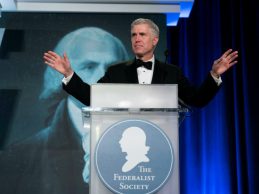
Overall, it was an excellent week with much intellectual discourse occurring in D.C. However, the highlight of the week was Justice Neil Gorsuch’s address at the Antonin Scalia Memorial Dinner. Some notable moments included his reaffirmation of the importance of Federalist 78 in the context of the judiciary today. We must return to the principles embodied there when Hamilton stated the judiciary “[c]an take no active Gorsuch Fed Soc Dinnerresolution whatever. It may truly be said to have neither FORCE nor WILL, but merely judgment.”
Gorsuch explained in his address to the many in attendance- “In our legal system, judges wear robes not capes.” Invoking this foundational principle when interpreting the law will benefit the Supreme Court and American people. Justice Gorsuch has shown with his decisions and commentary that he is well aware of his place as a judge on the highest court as an interpreter and not a legislator. He is the judge this country needed and will ensure originalism continues to be a core philosophy when interpreting the Constitution. He stated, “Originalism has regained its place and textualism has triumphed and neither is going anywhere on my watch.” I believe he will keep his promise. The late great Justice Scalia has a worthy heir to carry on the Constitutionalist legacy.

Justice Gorsuch, carry on the great work – Constitutionalists, Federalists, and the American people support you and are proud to have you as a champion for originalism on the Supreme Court.


Reflecting on Clarence Thomas and “My Grandfather’s Son”

Lately, Thurgood Marshall has been on the news for Hollywood’s portrayal commemorating his storied career in “Marshall.” Yes, Marshall does deserve commemoration for being a trailblazer for African-Americans on the highest court in the land. However, one cannot help but view the differences in society’s portrayal of Marshall versus that of Justice Clarence Thomas. Too often the narrative does not treat Justice Thomas’ legacy in the same storied fashion. There are examples ranging from categorizing him as an “Uncle Tom” to not being honored timely in the African-American Smithsonian exhibit among many others.

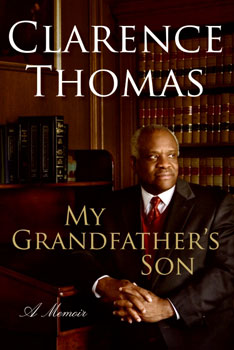
Some time ago, I read Thomas’ book, “My Grandfather’s Son” and it was nothing short of inspiring. It’s a story based on more than just Constitutional interpretation, but rather a story of a journey- a journey from Justice Thomas’ humble beginnings to being among the most influential figures in modern American history as a member of the United States Supreme Court. One does not have to be a Constitutionalist to appreciate it, the lessons learned cross the ideological spectrum. It encourages us to really dig deep into the person that is Justice Thomas and how adversity should never stop us from achieving our goals. My Grandfather's Son

Clarence Thomas begins his book describing his early childhood in Georgia and how he and his brother were raised by his grandparents. Throughout much of the book, he focuses on his Grandfather and how he was an early inspiration to him in how he carried out his life. His Grandfather had a strong work ethic and self-discipline and he held the young Clarence Thomas to this standard.  He used a powerful metaphor to describe his life’s journey- “blisters come before calluses, vulnerability before maturity.” His life would be filled with many ups and downs, “blisters” if you will, before he found his true calling and became one of the greatest jurists of the modern era.

After spending some time in the seminary, he withdrew among the racist tensions of the 1960s and enrolled in Holy Cross College. There, he became a student activist and gained an interest in the political climate of the time. He would later pursue a career in law and attend Yale Law school where he would eventually befriend future U.S. Ambassador John Bolton. Later, while reflecting on his college and law school experiences he admits they influenced his position on Affirmative Action programs.

Following law school, Thomas worked for Missouri Attorney General and future Senator Jack Danforth. When Danforth was elected to the senate, Thomas joined him and began his experience in Washington. Eventually his career took him to chairing the Equal Employment Opportunity Commission (EEOC) under President Ronald Reagan. However, during his early years in Washington he struggled with alcoholism and struggled with his personal relationships. He explains the struggle, and the battle it took to overcome it. It had dawned on him that he must return to the lessons of his Grandfather and put his life back on track.

President George H.W. Bush nominated him to a position on the Federal Court of Appeals for the D.C. Circuit and eventually the Supreme Court to fill the vacancy left by Thurgood Marshall. Thomas recounted a notable conversation with the President  and I think it strikes to the heart of Justice Thomas’ own view of his role as a judge.

The first question President Bush asked him during the vetting process for his nomination him was, “If you are appointed to the Court, could you call them as you see them?” Clarence Thomas responded, “That is the only way I know how to do my job. . .”  This exchange reflects the very character of Justice Thomas and nicely summarizes his tenure on the Supreme Court. Justice Thomas is one that does not look to use his role on the Court as a means to legislate social policy, but rather as an obligation to interpret the law.

The hearings for his Supreme Court  nomination are well documented so I do not need to go in-depth here. However, I will say with the Bork tide of the late 1980s still fresh in the minds of the public, Thomas’ process was the latest example during that era of politicization of the process and a so called- “muddying” to say the least. Scholars will continue to debate the merits of it for many years to come, but all will agree that it was a challenging time for Justice Thomas and tested him to extremes. Ultimately, Justice Thomas triumphed and persevered, gaining seat on the Court. The nation has certainly reaped the benefit.

Thank you for your great work Justice Thomas and keep being a guiding light to Constitutionalists and the larger society.

Citation:

Thomas, Clarence, 1948-. My Grandfather’s Son : a Memoir. New York :Harper, 2007. Print.

The Importance of Seating the Federal Judiciary Nominees

The Supreme Court tends to get most of the attention when judiciary vacancies occur for good reason as the highest court in the land. However, one must not neglect the vacancies that arise at the federal circuit level. Many of the hot-button cases that are heard and decided at the circuit level have a good chance to be heard at the Supreme Court. Some examples in the modern day include the Obamacare Litigation, Same-Sex Marriage, Second Amendment, Affirmative Action and the Travel Ban litigation.

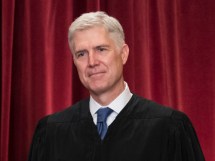
The judges at the circuit court level help set the course for the Supreme Court to review the matter. For example, Judge, now Justice Gorsuch heard the Hobby Lobby case while still a circuit judge on the 10th Circuit Court of Appeals. He provided a persuasive Neil Gorsuchconcurrence on the importance of recognizing the right of individuals in regards to religious freedom.[1]    During his hearings, this view drew the attention from both sides of the aisle.
Furthermore, in addition to considering the content of the law produced at the circuit level, these courts are also typically viewed as “feeder courts”  for future Supreme Court appointees. Eight of the Nine current Supreme Court justices have sat at some point in their career at the circuit level. The President had the opportunity to make several appointments in recent months and according to Mitch McConnell , the senate will proceed with the nomination votes this week for some of them.

It is a considerable list of names, but one I would like to highlight as perhaps being among consideration for the Supreme Court one day is Notre Dame Law Professor Amy Barrett.  She was appointed to fill a vacancy on the Seventh Circuit.

Amy Barrett has become well-known because she came under intense scrutiny and unfair questioning by several politicians at her hearings.  It was premised on her Catholic faith and how that would impact her decision-making on the bench.  She had an accomplished career that included clerking for the late great Justice Scalia and practicing at several high-profile firms before becoming a law professor at Notre Dame. Her views on a more flexible approach to Stare Decisis doctrine would be a welcome addition to the Supreme Court one day.[2]  I encourage you to review her writings and continue to become familiar with her philosophy and dedication to originalism. It is not outside the realm of possibility that one day she may be considered to replace a retiring Ruth Bader Ginsburg.  At the federal circuit level, she will be given a great opportunity to showcase her abilities. It is a career worth following and could lead to a position at the highest court one day in the steps of her former boss, Justice Scalia.

Overall, this should be an exciting week for Constitutionalists as the high-profile nomination votes begin to occur. The process of returning the nation to Constitutionalist principles starts on the federal bench. No matter the administration or philosophy in power, the federal circuit courts provide a check to the other branches of government. Many of the important cases decided there and the judges who hear cases at that level may one day find themselves on the Supreme Court.

[1] And as we have seen, it is not for secular courts to rewrite the religious complaint of a faithful adherent, or to decide whether a religious teaching about complicity imposes “too much” moral disapproval on those only “indirectly” assisting wrongful conduct. Whether an act of complicity is or isn’t “too attenuated” from the underlying wrong is sometimes itself a matter of faith we must respect”
Hobby Lobby Stores, Inc. v Sebelius, 723 F3d 1114, 1153–54 [10th Cir 2013], affd sub nom. Burwell v Hobby Lobby Stores, Inc., 134 S Ct 2751, 189 L Ed 2d 675 [2014].


[2]Amy Barrett, Precedent and Judicial Disagreement, Texas L. Rev. Vol. 91. No. 7. (2013).

Constitutionalists on Trial Part 1: Robert Bork

Periodically, I will highlight some major legal figures and their contributions to Constitutional law.  Many discussed will stand out because they stood firm on their Constitutionalist beliefs despite the pressure from societal forces to discredit them and restrict their voice. The series will be titled Constitutionalists on Trial.

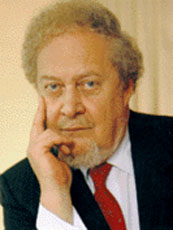
The first installment will present one of the modern fathers of Constitutionalism, Robert Bork. A more detailed analysis of his legal theory that I composed was published by the St. John’s Law Review Online Commentary and can be found here.[1] I credit Robert Bork and his book, “The Tempting of America”[2]  as being a central influence on me when I crafted my perspective on Constitutional law. His analysis on Constitutional law and breaking down the problematic position the Supreme Court has placed the nation in over the last few decades has inspired me to present this information to others, in an effort to educate and inform. Bork

Judge Robert Bork was appointed to the Supreme Court in 1987 by President Ronald Reagan. He previously served on the Federal Court of Appeals for the D.C. Circuit and had never been reversed by the Supreme Court. The D.C. Circuit is considered among the most powerful and influential and several Supreme Court Justices served time there before being nominated to the Supreme Court.  Throughout his career leading up to the appointment by President Reagan, Bork presented himself as a harsh critic of some of the major societal altering decisions such as Griswold v. Connecticut[3] and Roe v. Wade[4].  His critique of these decisions stemmed from the belief that the Supreme Court far exceeded its boundaries of power by declaring that certain fundamental rights existed with no firm Constitutional root. In the process, the voice of democracy and state legislative decisions were replaced with judicial activism. This problem continues to this day.

Sadly, Bork was the victim of a relentless distortion machine led by the late Senator Ted Kennedy and former Vice-President and then Senator Joe Biden. In addition, millions were spent and funneled through the media to defame Bork’s name and miscategorize his legal philosophy to turn the public tide and ultimately the senate against his appointment.  A common attack line was claiming that Bork waged a war against women because he sought the overturn of Roe. This distortion resonated with many of the societal forces that would reject his nomination. The senate leadership that promoted this myth did a great disservice to this country, as Judge Bork would have served valiantly on the Supreme Court and had sought to return a sense of Constitutionalism to the nation’s highest court.

However, I will conclude with this takeaway that many should consider when reflecting on the legacy of Judge Bork.  As the distortion machine began to increase in strength and continue to spread lies, Judge Bork did not back down, rather he persevered. Despite the hostile questioning that arguably was done for flashy media attention during the hearings, he tied his responses back towards the Constitution to put pressure on the senators and challenge them. He also did not go away quietly. Rather than withdraw his nomination and buckle under the public pressure, he was determined to see the final vote. The senate ultimately voted against him 58-42 and rejected his nomination. However, his legacy remains through his philosophy and willingness to persevere even if the outcome is not optimal.  Judge Bork, your ideas will continue to live through the modern Constitutionalists and it is our mission to make sure the movement you started will one day deliver practical results at the highest levels of law.

Thank You

[1] Michael DeBenedetto; A Borkean Revival, St. John’s L. Rev. Online Commentary (2017).  https://sjlrevtest.files.wordpress.com/2017/02/a-borkean-revival.pdf

[2] Robert Bork, The Tempting of America: The Political Seduction of the Law, New York. Touchstone. (1991).

[3 381 U.S. 479 (1965). Griswold established a fundamental right to privacy. It overturned a Connecticut State Statue that banned the use of contraception.

[4] 410 U.S. 113 (1973).  Roe established a fundamental right to abortion and invalidated the laws of many states that banned the practice of abortion.

Our Mission and a Bit of Hamilton

The mission of this blog is to inform about the importance of Constitutionalism in the modern age. One may ask, “what is Constitutionalism?” Constitutionalism is the study and understanding of the Constitution by looking to the document and intent of the framers to govern society.  Constitutionalists do not drift from the substance of it, but rather work within it to meet the needs of the modern day. This is different than the so-called  “living constitutionalist” theory of interpretation or progressive approach. Those approaches commonly find themselves using the Constitution as simply a spring-board to meet societal ends.

This is precisely what Alexander Hamilton warned about in Federalist 78 when considering the role of the Supreme Court, “It may truly be said to have neither FORCE nor WILL, but merely judgment.” If looking closely at Hamilton or Publius’ words as he was known by pen name, we can contemplate that the tendency to exert “force” or “will” often occurs when we move away from the Constitution and create our own interpretations on what the law should be rather than what the law is. By working within the Constitution and its boundaries we find ourselves exercising more judgment rather than will which is what Hamilton and the framers intended.

However, we must not neglect the fact that the Constitution did include an element to adjust with the changing times of society. The framers knew that there would be new ideas and problems the young nation would encounter. They were humble enough to realize that they did not have all the answers, thus the amendment process in Article V was created. This is the embedded tool within the Constitution to allow for changes. By using this process we have seen great progress as a nation such as the bill of rights, ending slavery and giving women the right to vote.  As judicial activism has increased the need for this process has been sadly lost in the modern age. This concept among other concepts is generally not discussed and when it is, it is often mocked and belittled. As a nation, we should work towards a renewal of using this timeless gift that was given to us by our framers, rather than an over-reliance on the pen and prose of a judge.

This blog will seek to enlighten minds across the legal spectrum with our discussion of modern issues and scholars articulating excellent ideas that should be considered in the mainstream. We welcome all philosophies to this blog and hope one gains a deeper understanding and respect for the Constitution.